
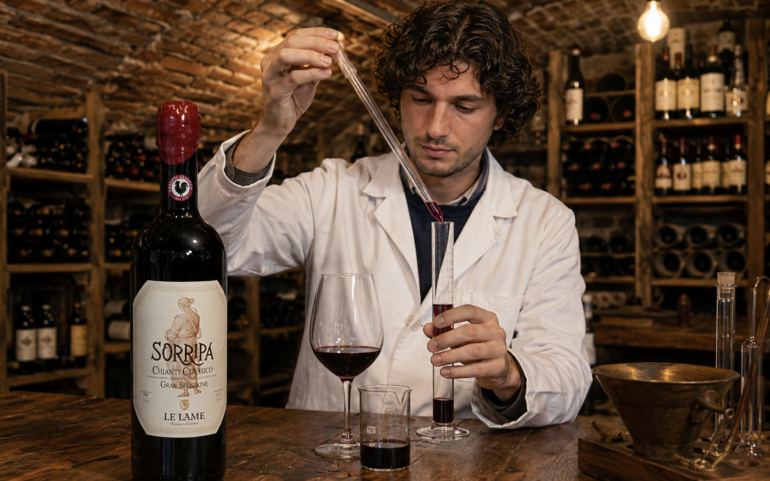
Sulphites in wine: what they really are and why people talk about them
Sulphites in wine: a few words on a label, but many questions at the counter. Some people worry about them, some believe they are responsible for every headache, while others look only for bottles “without sulphites” without really knowing what that means. In reality, the subject is technical, but also easier to understand than it may seem.
At Enoteca Zanobini in Florence, it often happens that someone comes in asking for a wine that is “more natural”, “easier to drink” or “low in sulphites”. The right answer is never a slogan, but a clear explanation: understanding what sulphites are, why they are used and how they really affect wine preservation.
What are sulphites in wine?
Sulphites are compounds derived from sulphur dioxide. In winemaking, they are mainly used to protect wine from oxidation and from certain microbiological alterations. In simple words, they help wine preserve its colour, aromas, stability and aromatic cleanliness over time.
One important thing to know is that a small amount of sulphites can form naturally during fermentation. This means their presence does not always depend only on an external addition. The real difference lies in the total quantity and in the way the producer manages the wine in the cellar.
Why are sulphites used during production?
Wine is a living matter. It continues to evolve over time and can be sensitive to air, temperature, light and microorganisms. Sulphites are used precisely to reduce these risks.
In the cellar, they may be used at different stages: after fermentation, during ageing, before bottling or in different quantities depending on the style of wine. A fresh white wine, a sweet wine, a structured red wine or a Chianti Classico intended for ageing may all have different technical needs.
Natural sulphites and added sulphites: what is the difference?
When we talk about “natural sulphites”, we refer to those that may develop spontaneously during fermentation. “Added sulphites”, on the other hand, are those introduced by the producer to protect the wine and ensure its stability over time.
This does not automatically mean that a wine with added sulphites is of lower quality. On the contrary, in many cases a correct and measured use allows the wine to reach the consumer in better condition, especially if the bottle has to travel, remain in storage or be kept for years.
“Contains sulphites”: what does it mean on a wine label?
The phrase “contains sulphites” should not be alarming. It is a mandatory indication when the presence of sulphites exceeds a certain threshold, and it is intended to inform consumers correctly, especially those with specific sensitivities or allergies.
For a more scientific point of view on food safety, you can also read the EFSA assessment on sulphites in food, which explains the subject in a detailed and authoritative way.
Do sulphites change the taste of wine?
When used correctly, sulphites should not cover the identity of a wine. Problems may arise when their use is excessive or when the wine is not well balanced. In those cases, the wine may seem sharper, less harmonious or less expressive from an aromatic point of view.
A well-made wine, instead, keeps its character: the grape variety, the territory, the vintage, the work in the vineyard and the choices made in the cellar remain clear. This is why reading one sentence on a label is not enough to understand whether a bottle is suitable for your taste.
Natural, organic and no-added-sulphites wines
In recent years, many consumers have started looking for organic wines, natural wines or wines with no added sulphites. These are interesting worlds, but they should not be confused with one another.
An organic wine follows precise rules in the vineyard and in the cellar. A natural wine, on the other hand, often comes from a less interventionist production philosophy, but the definition may vary greatly. A wine with no added sulphites may still contain a small quantity of sulphites produced naturally during fermentation.
The most useful question, therefore, is not only “does it contain sulphites?”, but also: what kind of wine is it? How was it produced? How stable is it? What sensations does it give in the glass? Is it meant to be drunk young or can it age?
How to choose wine without being influenced only by the label
The label is important, but it does not tell the whole story. Two wines may show the same indication and still have completely different aromas, structure and drinkability. To choose well, you need some context: grape variety, production area, producer style, vintage and drinking occasion.
A wine to enjoy by the glass during an informal break does not have the same needs as a bottle to keep in the cellar. A young red wine does not behave like a Riserva. A wine for an aperitif does not have the same balance as a bottle designed to accompany an important meal.
Asking for advice in a wine shop is still the best way
The subject of sulphites in wine is a good example of how important direct advice still is. In a real wine shop, you do not choose only by looking at a word on the label, but according to taste, occasion, budget and curiosity.
At Enoteca Zanobini, in the historic center of Florence near the Central Market and San Lorenzo, wine can be bought by the bottle or discovered by the glass. This allows visitors to taste, ask questions and better understand the differences between a Chianti Classico, a younger Tuscan wine, a bottle for ageing or a more immediate choice.
The best choice often begins with a simple conversation: what do you like to drink? Do you prefer a fresh or structured wine? Are you looking for a bottle to take home, a gift, a glass before dinner or a label to keep for the future?
A small technical subject that helps you drink better
Talking about sulphites does not mean turning wine into a chemistry lesson. It means learning to read what we drink more carefully, avoiding unnecessary fears and choices made only because of trends.
Wine remains, above all, pleasure, territory, balance and encounter. Knowing what lies behind a bottle helps us choose with more awareness and enjoy every glass more fully, especially when someone can explain clearly and simply what we are drinking.
That is why, when you visit Enoteca Zanobini in Florence, do not simply look at the shelves: ask, taste and compare. Sometimes the best way to truly understand a wine is to talk about it in front of a glass.